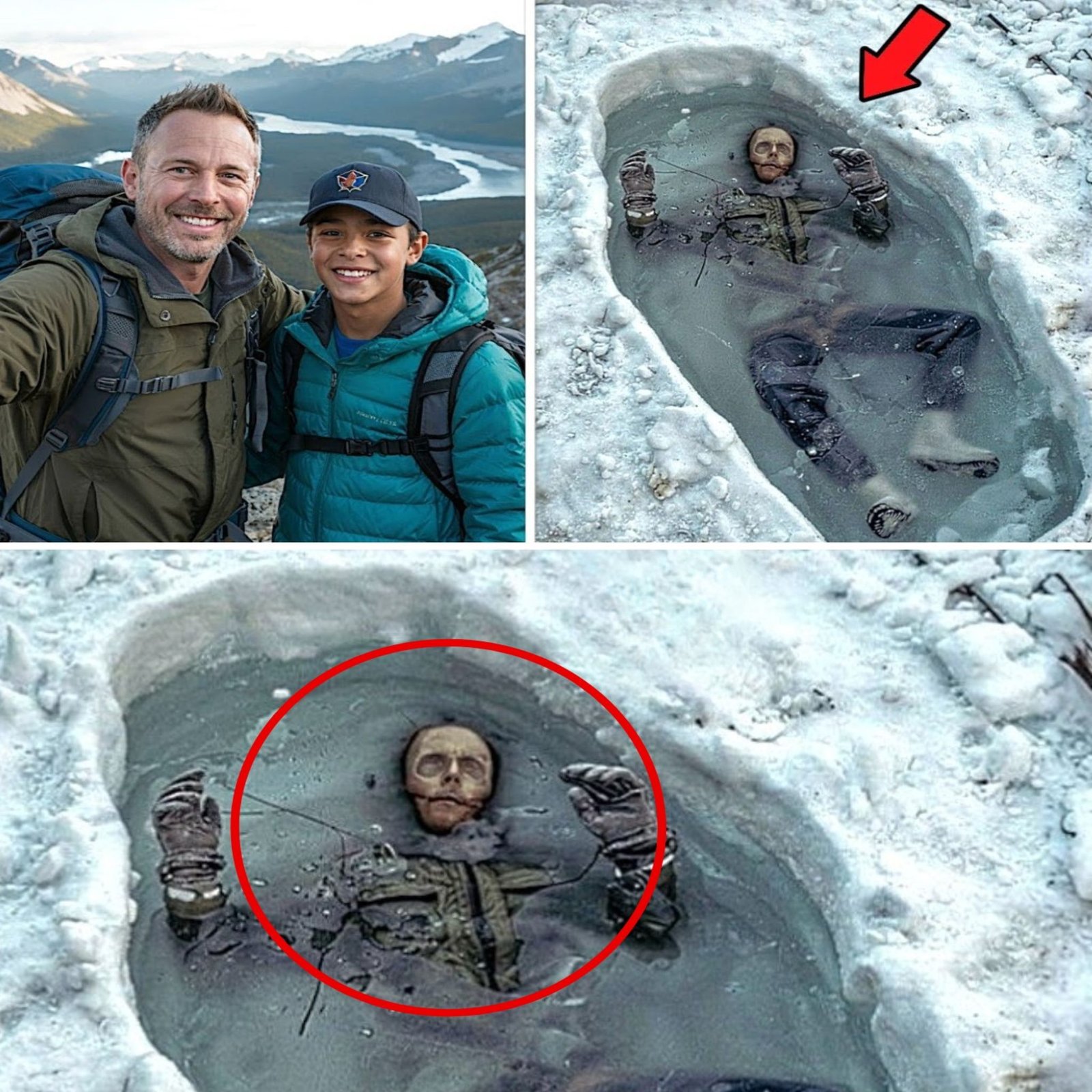
For ten long years, the Alaskan wilderness kept its secret buried beneath ice, silence, and snowdrifts that rewrote the land each winter. A father and his young son had vanished during what was supposed to be a short expedition — a routine journey that never raised alarms until they failed to return. Search teams blamed storms, crevasses, wildlife. Eventually, the case was closed, remembered as a tragic but simple accident in a place where nature always wins.
Then the silence broke.
Just weeks ago, hikers trekking through a newly thawed stretch of remote terrain stumbled upon something no one was prepared to see: skeletal remains resting side by side, sheltered beneath a rock outcrop as if deliberately chosen. But it wasn’t the discovery of the bodies that sent shockwaves through authorities — it was what lay between them. Tucked carefully inside a weather-sealed pouch was a small, hand-written journal, miraculously preserved by the cold.
What investigators read inside shattered every assumption.
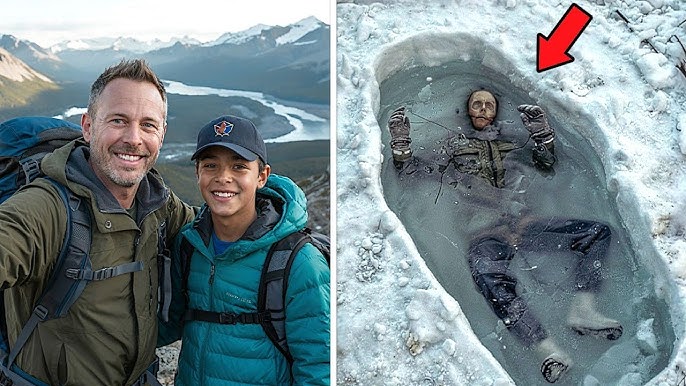
The pages revealed weeks — not days — of survival. Detailed entries described rationing food, building traps, battling frostbite, and fighting hallucinations as starvation set in. The father documented impossible choices, unbearable guilt, and the terrifying moment he realized rescue was no longer coming. The final entries, written in a shaking hand, suggested a decision so heartbreaking that seasoned detectives reportedly had to step away after reading it.
This was no accident. It was a slow descent into isolation, endurance, and love pushed beyond human limits. The wilderness hadn’t claimed them quickly — it tested them, day after day, until there was nothing left to give. And that small journal, never meant to be read, proved one haunting truth: sometimes survival isn’t about living… it’s about how long you refuse to let go.