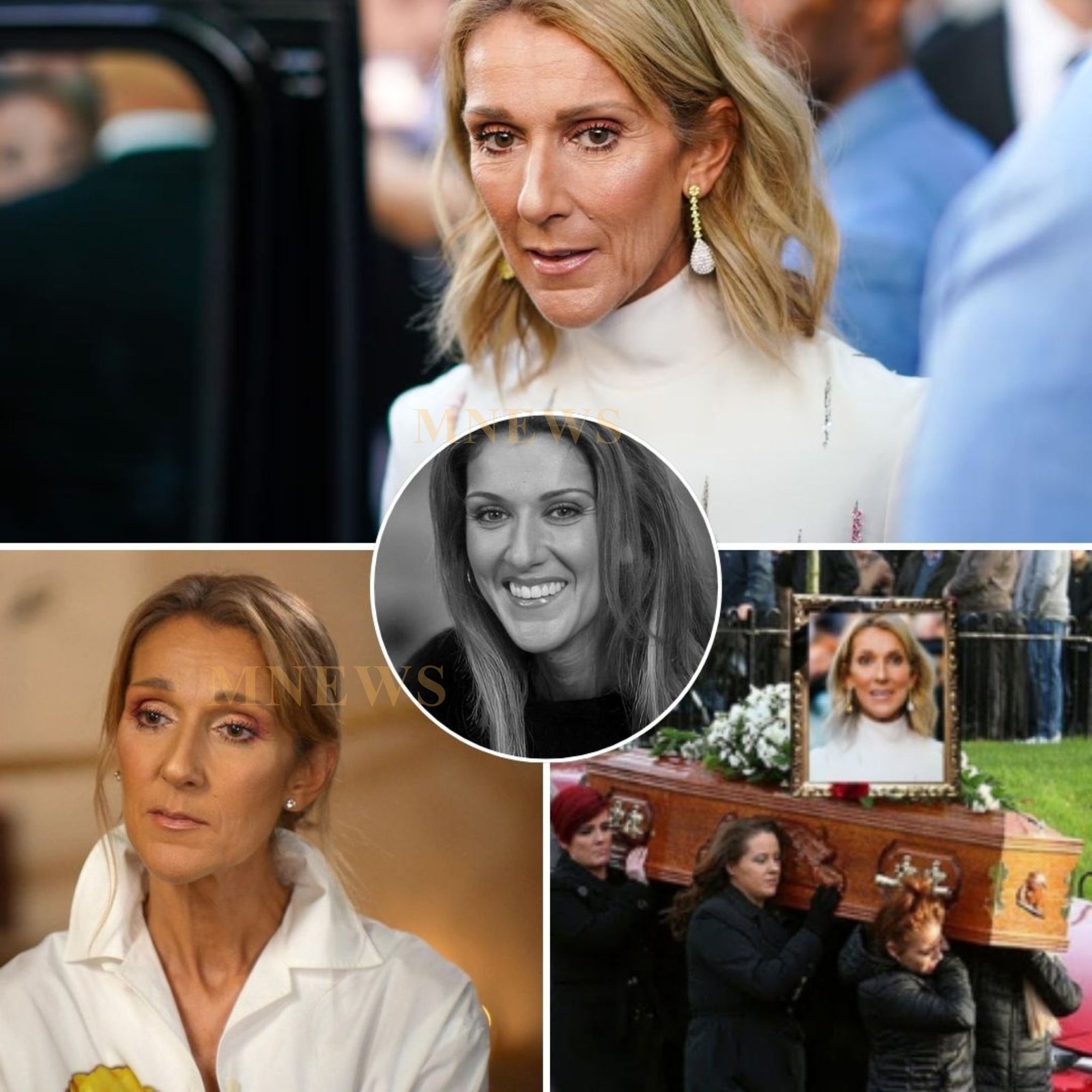
In a fictionalized, dramatized account, the world is said to have stood still as whispers spread of Celine Dion’s final moments — a scene so intimate and heartbreaking it felt beyond language. As the rare illness that had slowly stolen her strength reached its imagined end, those present described a room filled not with despair, but with an almost sacred stillness. Her body may have weakened, they say, but her spirit never bowed.
Witnesses in this story recall that Celine’s eyes still burned with defiance and grace, reflecting the same fire that once lifted stadiums to their feet. In her final breaths, there were no words — only the sense that a voice which carried generations had transformed into something eternal. It was as if her music lingered in the air, a final note refusing to fade, vibrating softly between memory and myth.
The woman who once made the world weep with a single chorus is imagined here not as gone, but transcended — her melody no longer bound to lungs or stage lights, living on in every moment her songs are replayed, every heart they still move. In this tale, an era ends not with silence, but with resonance — a reminder that some voices never truly stop singing.