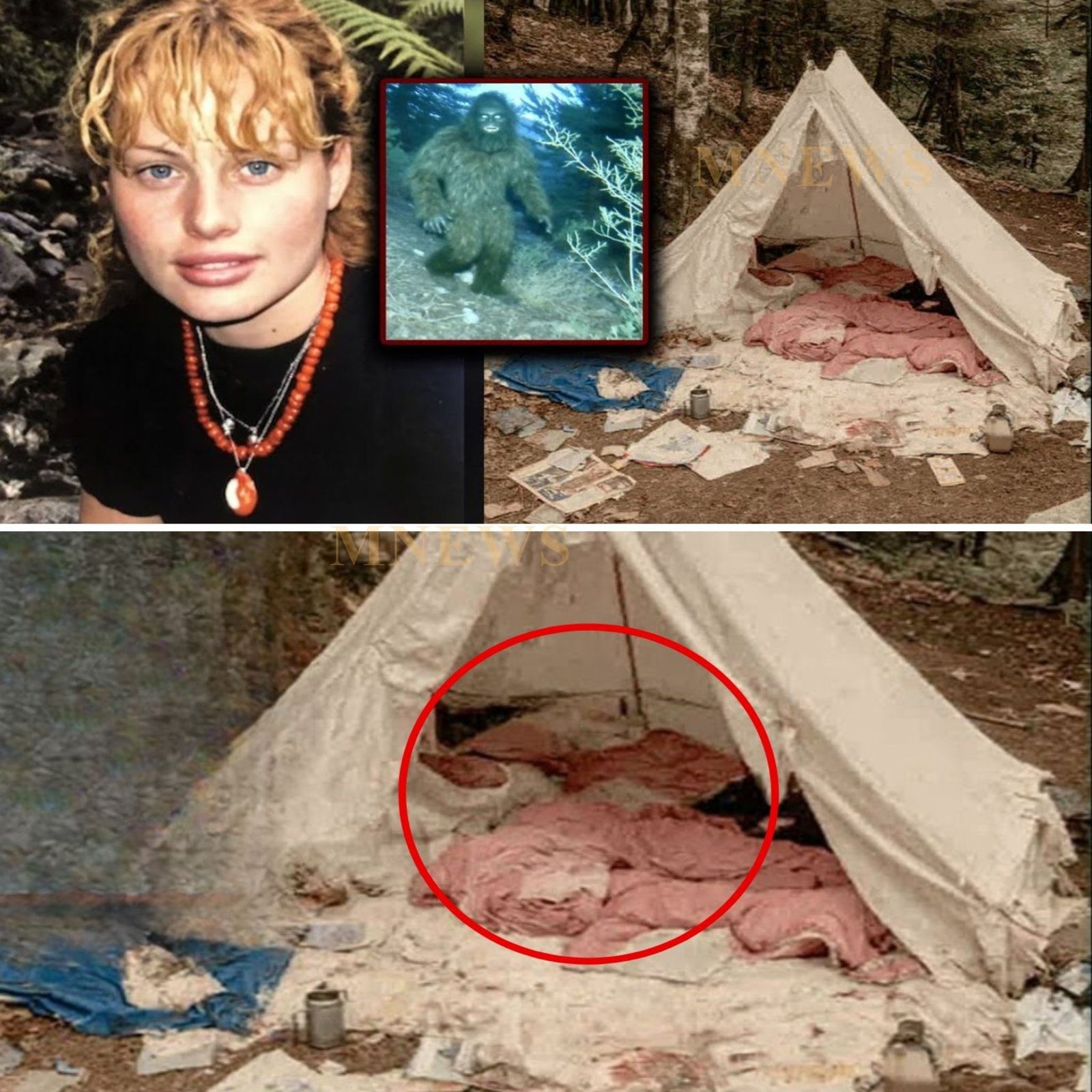
It began as a simple weekend getaway — a group of college friends escaping the noise of the city for a few quiet nights under the stars. The mountain air was crisp, the river nearby hummed softly, and the forest seemed timeless. But by the second morning, one of them was gone.
The disappearance of Lena Morales, a 22-year-old biology student from Colorado, would soon become one of the most haunting mysteries ever recorded in the region — a case that blurred the line between science and the unexplainable.
On June 14, 2018, Lena and three friends set up camp near Eaglecrest Ridge, a secluded stretch of forest known for its breathtaking views — and its unpredictable weather.
According to the official report, the group spent the evening around a small campfire, talking and singing before retreating to their tents just before midnight. Lena shared a tent with her roommate, Sarah Donovan.
“I woke up around 2 a.m.,” Sarah told investigators. “I thought I heard her zipper open — just once. I figured she was stepping out to use the bathroom. I went back to sleep. When I woke up at sunrise, her sleeping bag was empty.”
At first, no one panicked. They assumed Lena had gone for an early hike — she was known for her adventurous spirit. But by 9 a.m., her phone, wallet, and hiking boots were still inside the tent. Her jacket, too.
“She didn’t take anything,” Sarah said. “It’s like she just stepped out into the dark — and disappeared.
By noon, park rangers were notified. Within hours, search-and-rescue teams, dogs, and helicopters scoured the forest. The operation quickly expanded into one of the largest in state history.

For the first 24 hours, rescuers expected to find a disoriented hiker or signs of a fall. Instead, they found a set of footprints — barefoot, faint but clear — leading away from the campsite.
The prints were small, consistent with Lena’s shoe size, but the direction made no sense. They moved in perfect circles for nearly half a mile before veering sharply into a dense area of pine trees known locally as The Hollow.
Then, without warning, the prints stopped. Not faded — stopped. The last one pressed deep into the mud, as if she had stepped and then vanished mid-stride.
Veteran tracker Ranger Bill Cooper, who had participated in dozens of wilderness rescues, said what he saw disturbed him deeply.
“The prints were human,” he said, “until they weren’t. Around the twelfth step, they changed shape — longer, flatter, almost like someone dragging the front of their foot. And then… nothing. No scuff marks, no broken branches. Just silence.”
Drones scanned the area with infrared sensors, but there was no body heat, no movement, no trace. Even the dogs — trained to detect human scent for miles — lost the trail at the exact same spot.
“It’s as if she walked off the edge of the earth,” Cooper later said.